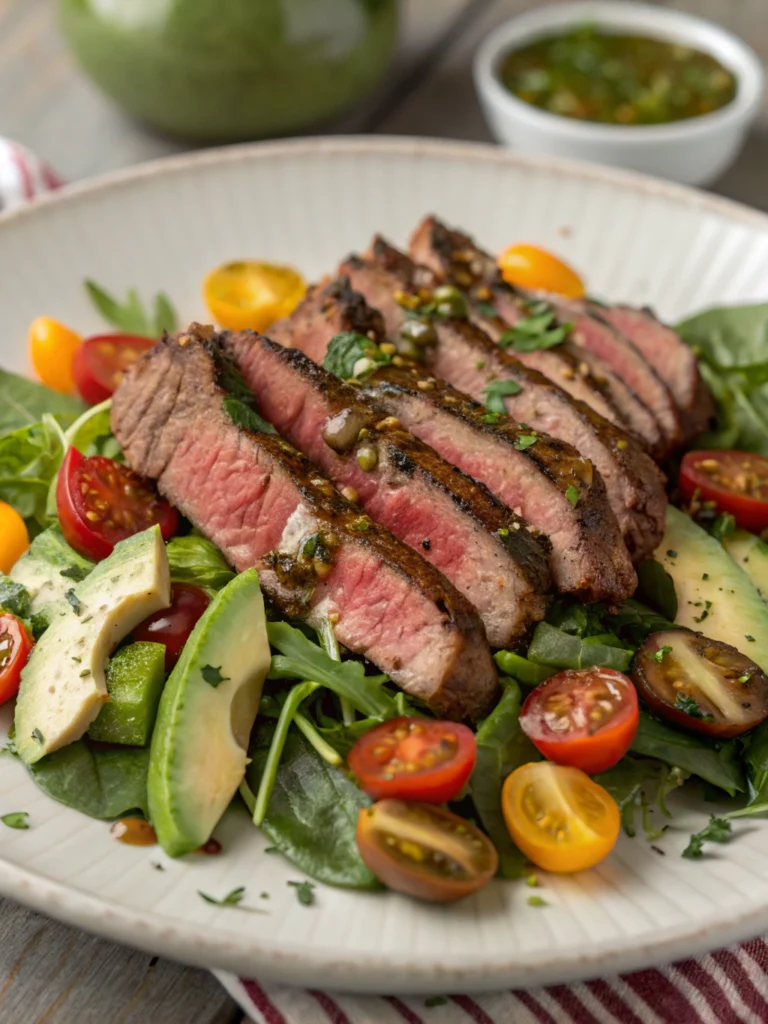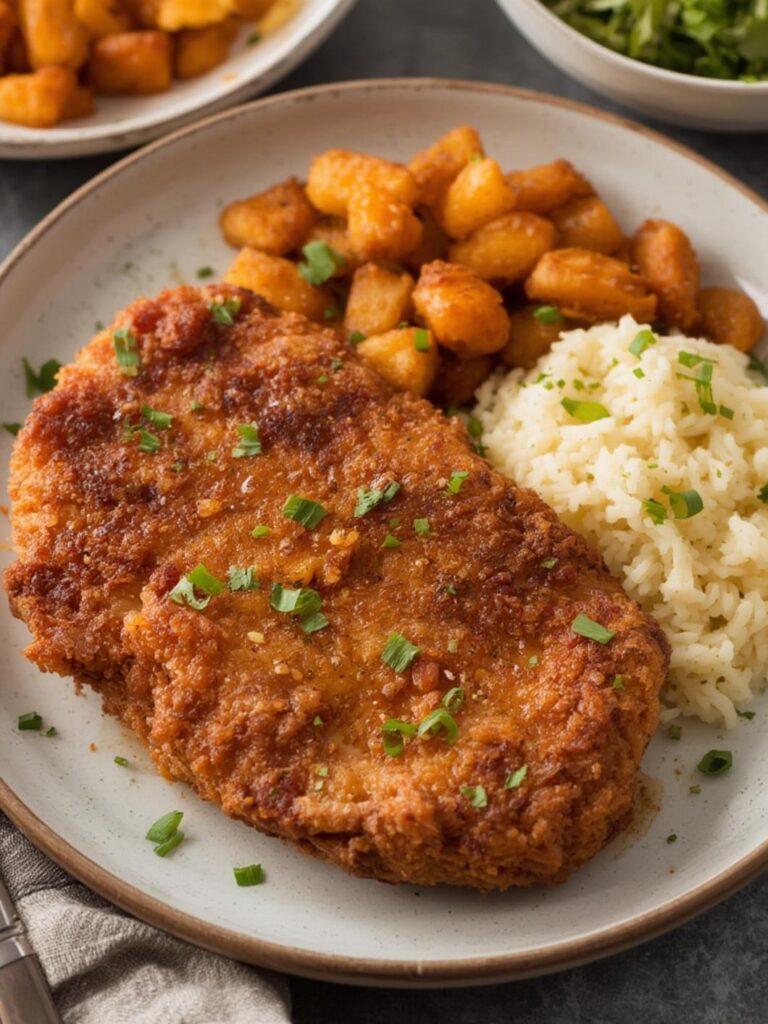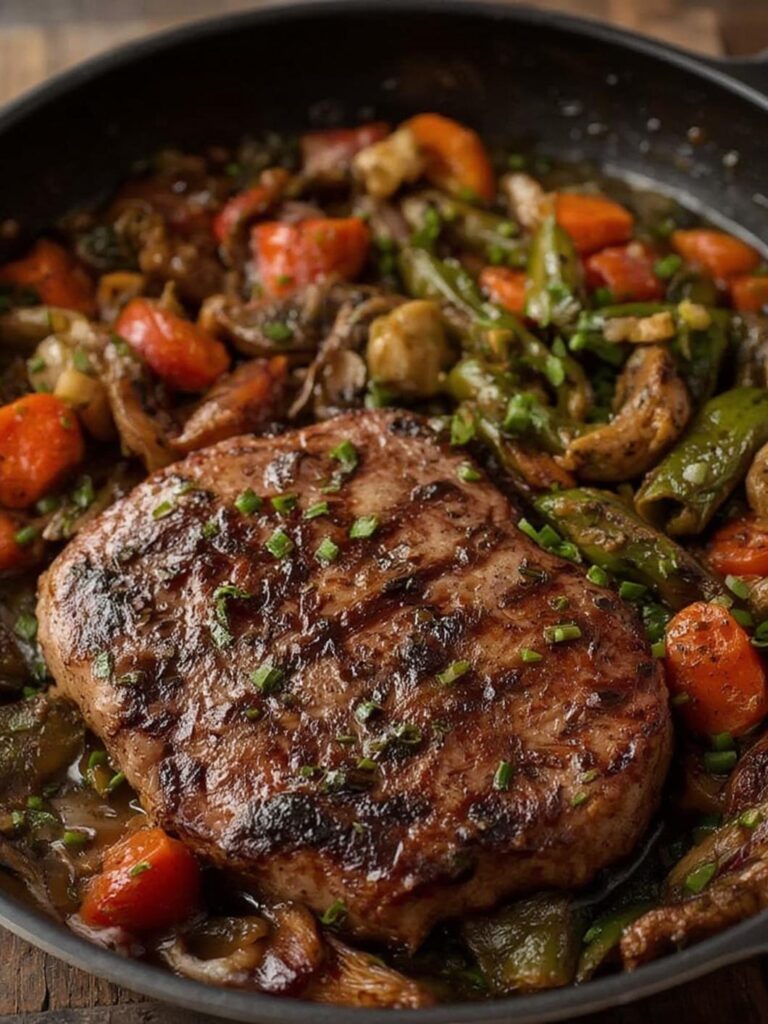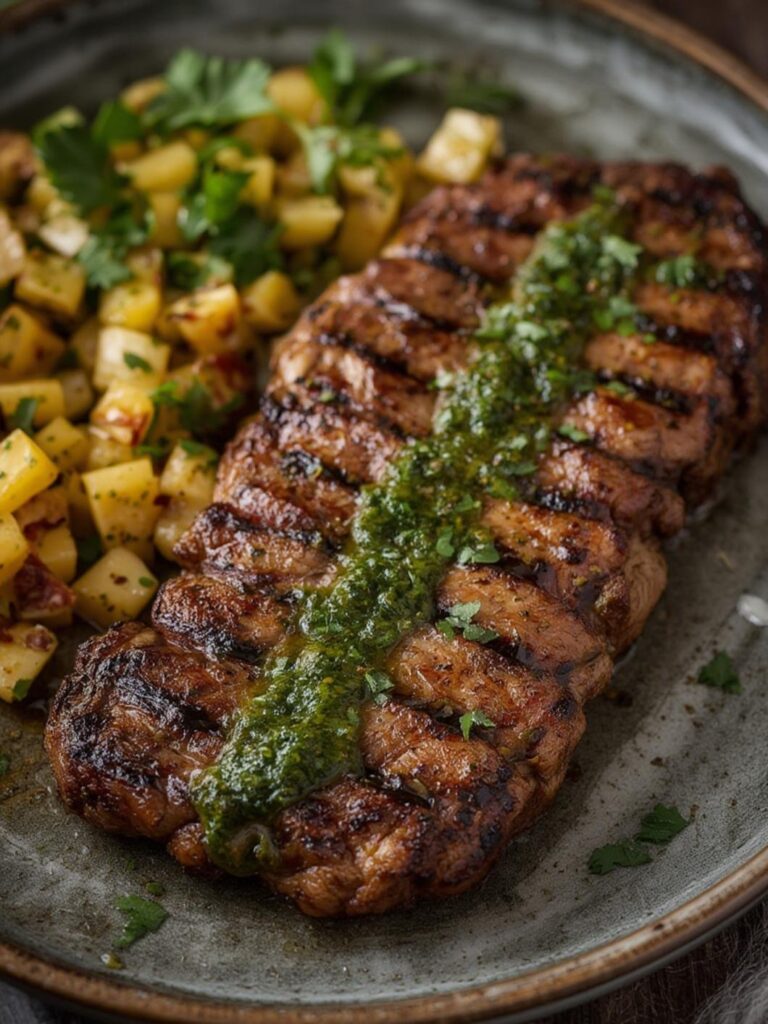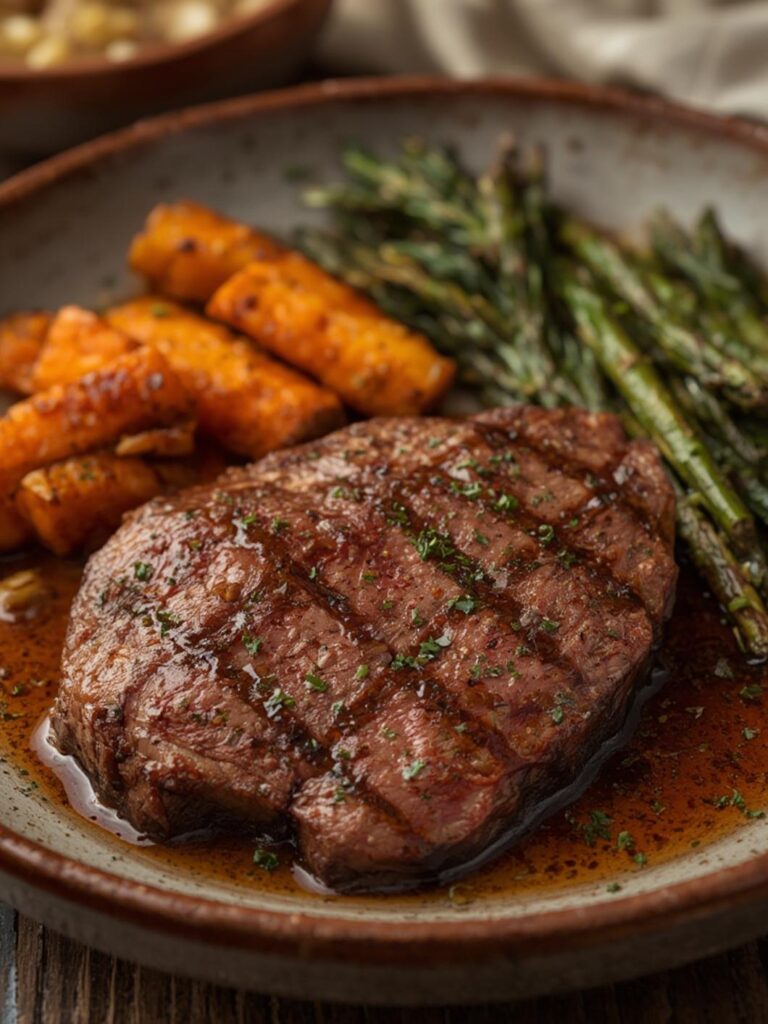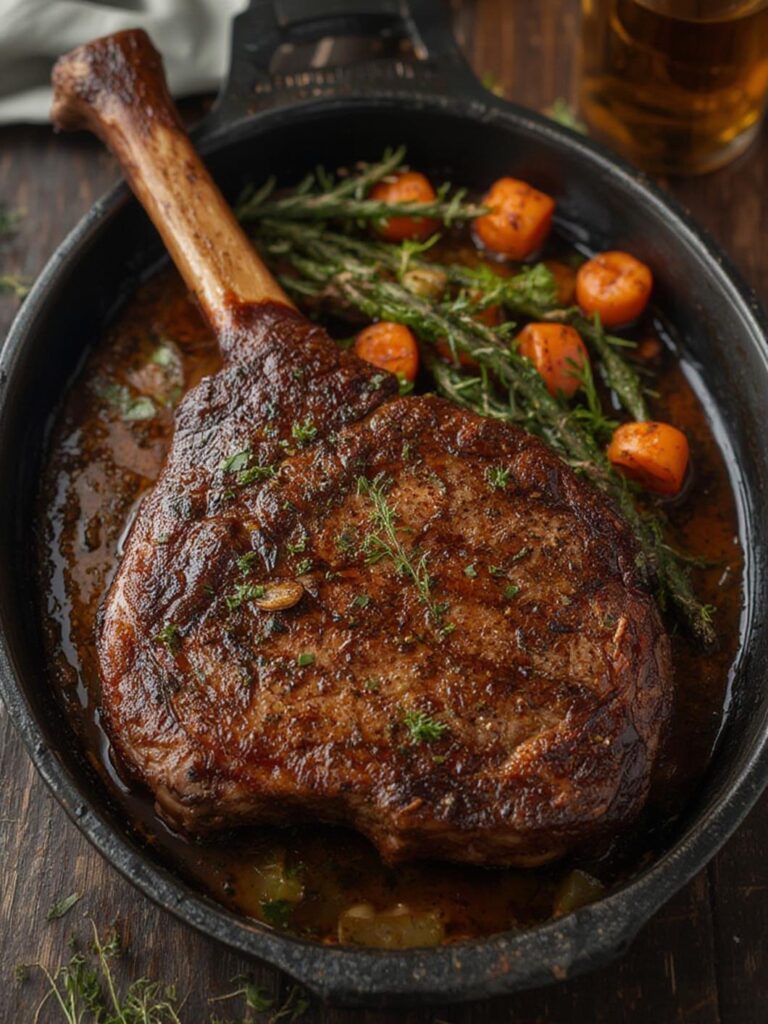
Quick way to make 5-Minute cooking steak on stove
Table of Contents
Perfect Steak Every Time: The Complete Guide
There’s something irresistibly satisfying about a perfectly cooked steak with its caramelized crust and juicy center. Many home cooks shy away from preparing steak, believing restaurant-quality results are unattainable at home. However, cooking steak on stove is actually one of the most straightforward methods to master.
Thank you for reading this post, don't forget to subscribe!With the right technique and a few key principles on how to sear steak properly, you’ll achieve restaurant-worthy results in your own kitchen. This method requires minimal equipment, works with various cuts, and delivers exceptional flavor through the Maillard reaction – that beautiful browning process that creates the complex, savory crust steak lovers crave. Let me show you how to transform a simple piece of beef into a mouthwatering meal.
Ingredients List
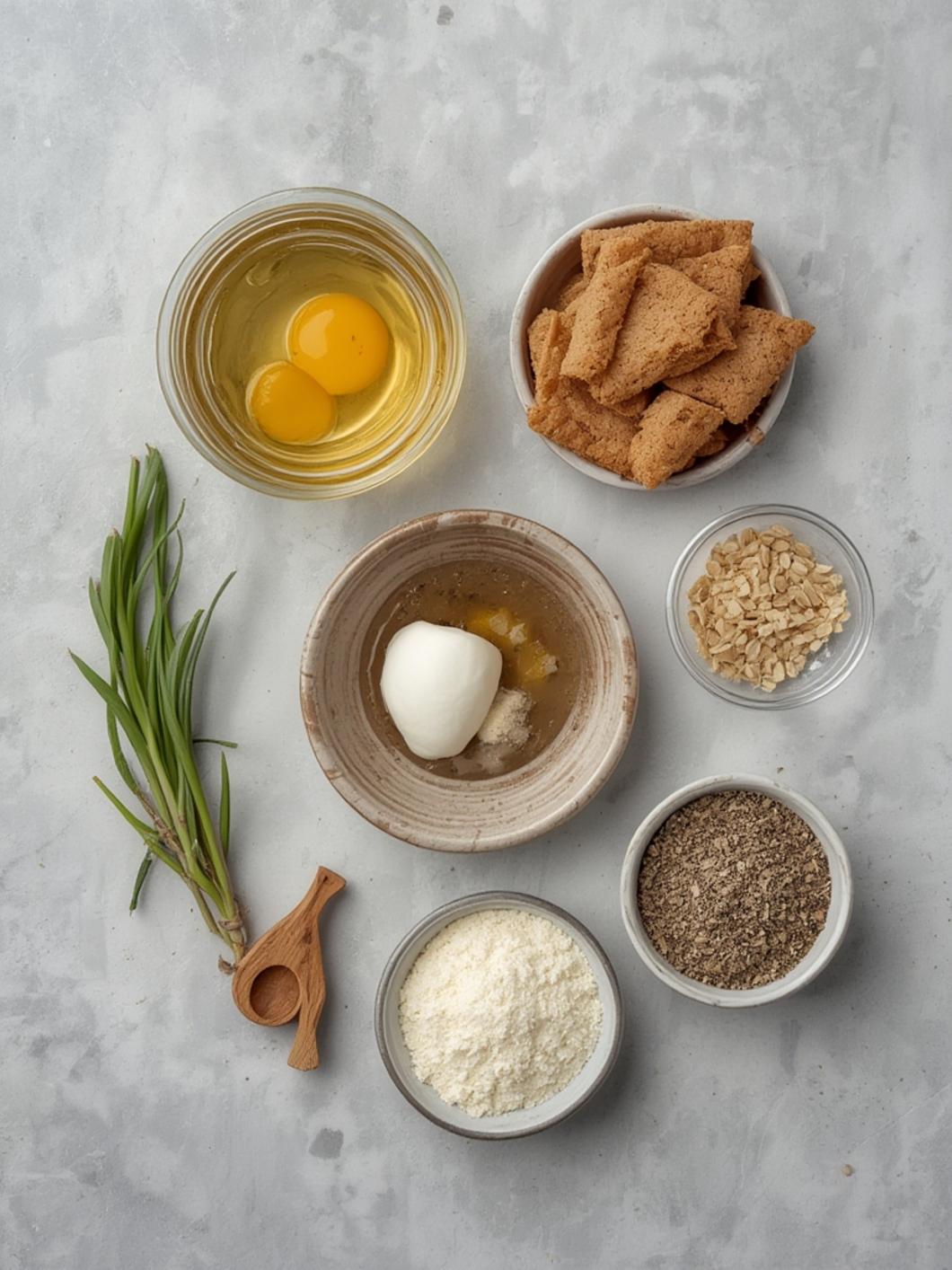
– 2 steaks (ribeye, New York strip, or sirloin), 1-1.5 inches thick
– 2 tablespoons high-heat cooking oil (avocado, grapeseed, or canola)
– 2 tablespoons unsalted butter
– 3-4 garlic cloves, lightly crushed
– 2-3 sprigs fresh rosemary or thyme
– 1.5 teaspoons kosher salt (or ¾ teaspoon table salt)
– 1 teaspoon freshly ground black pepper
– Optional: 1 tablespoon of your favorite steak rub
Step-by-Step Instructions
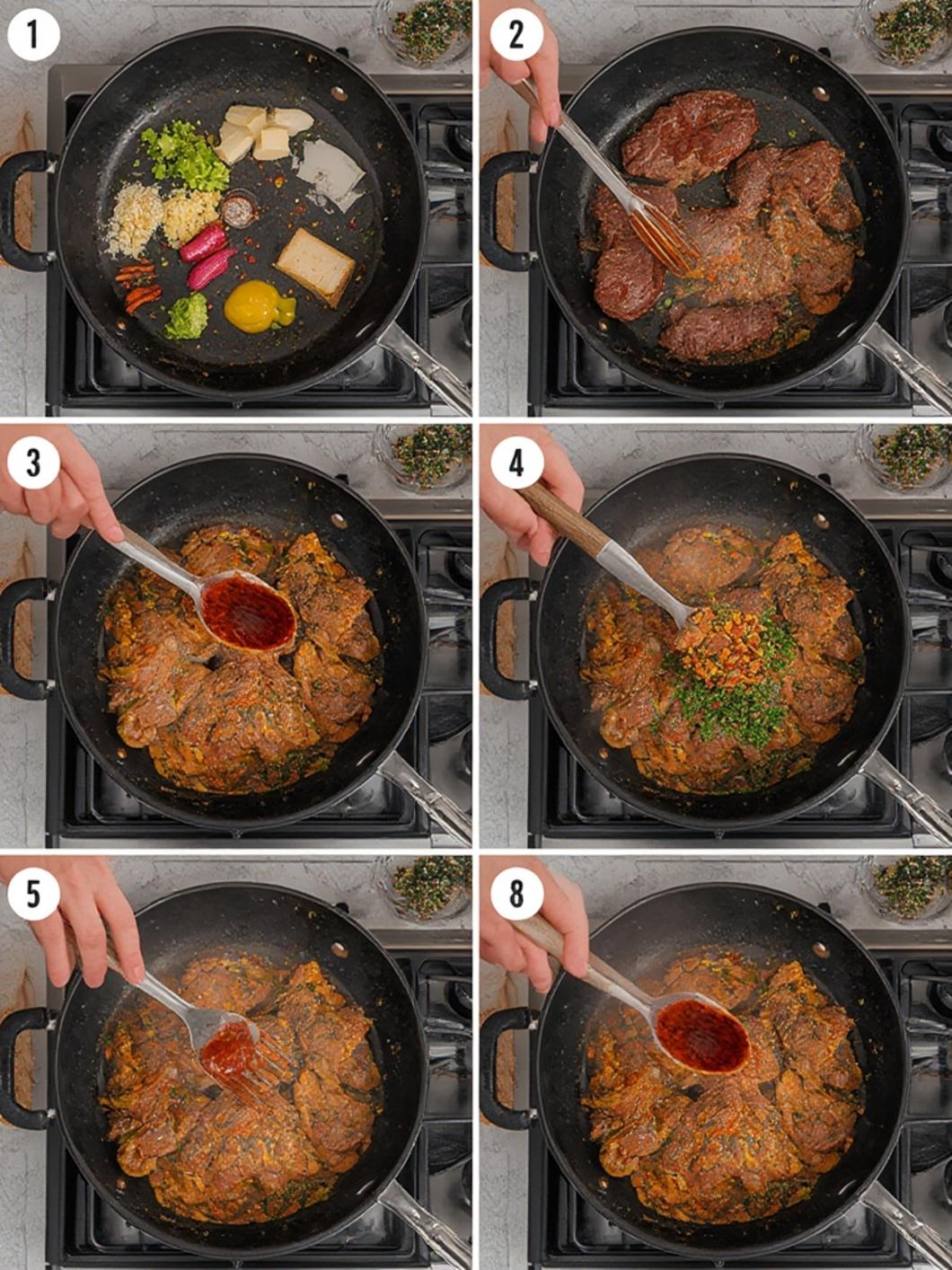
1. Bring to room temperature: Remove steaks from the refrigerator 30-45 minutes before cooking to allow them to reach room temperature for even cooking.
2. Pat dry and season: Using paper towels, thoroughly pat steaks dry on all sides. This is crucial for how to sear steak properly—moisture is the enemy of a good crust. Season generously with salt and pepper on all sides.
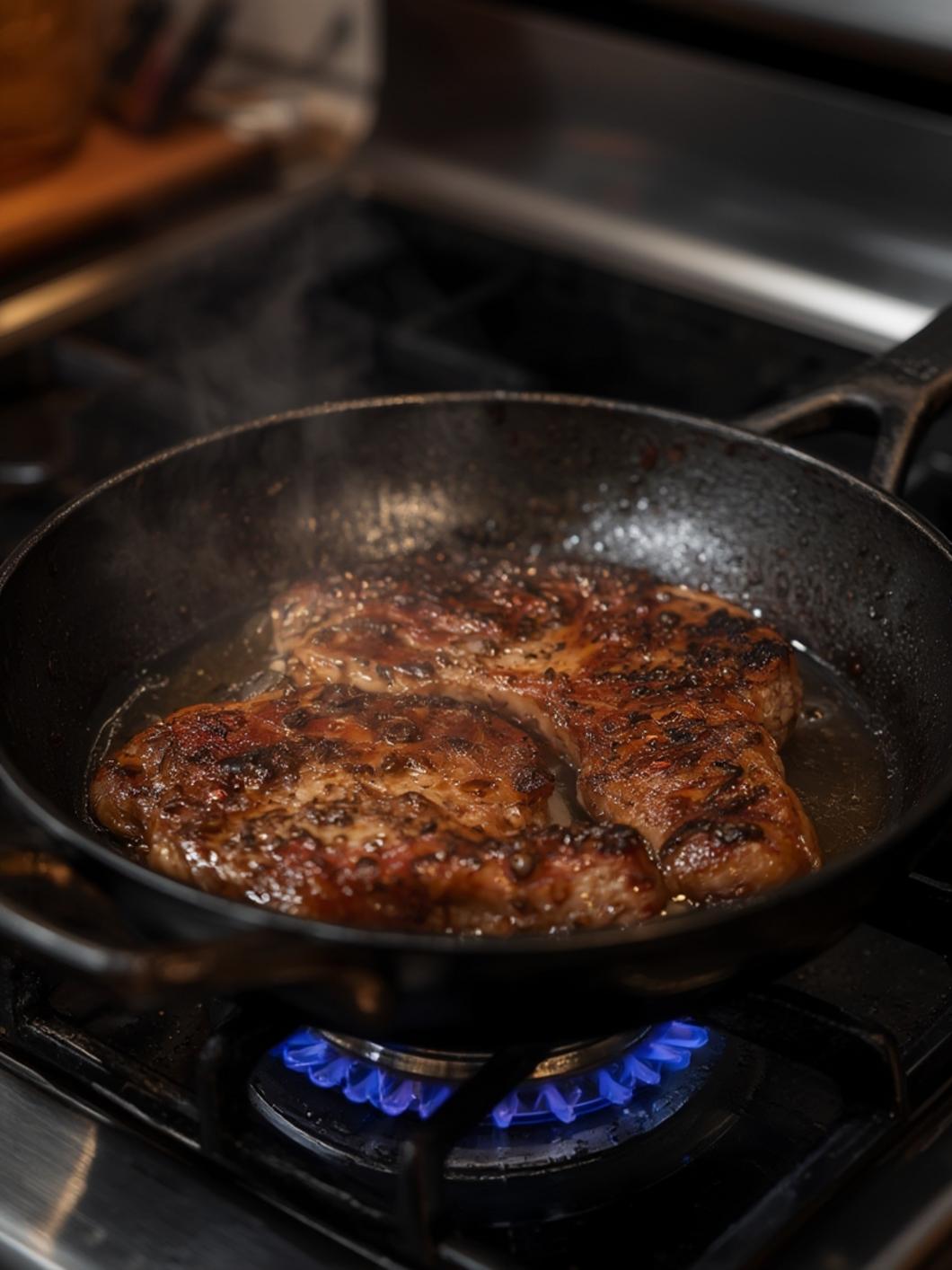
3. Prepare the pan: Use a heavy cast-iron skillet for best results when cooking steak on stove. Heat the pan over medium-high heat until it’s very hot, about 3-4 minutes.
4. Add oil: When the pan is hot, add the oil and swirl to coat the bottom of the pan. The oil should shimmer but not smoke excessively.
5. Sear the steaks: Place steaks in the pan, being careful not to overcrowd. For a 1-inch steak, sear for 4-5 minutes on the first side without moving it (this ensures proper crust formation).
6. Flip and continue cooking: Flip the steaks once and sear the second side for about 3-4 minutes for medium-rare, or adjust timing to your preferred doneness.
7. Add butter and aromatics: In the last 2 minutes of cooking, add butter, garlic, and herbs to the pan. Tilt the pan slightly and use a spoon to baste the steaks with the aromatic butter mixture.
8. Check for doneness: Use a meat thermometer for accuracy: 125°F for rare, 135°F for medium-rare, 145°F for medium, 155°F for medium-well, or 160°F for well-done.
9. Rest the meat: Transfer steaks to a cutting board and let rest for 5-10 minutes before slicing to allow juices to redistribute.
Preparation & Cooking Time
– Prep time: 10 minutes (plus 30-45 minutes to bring to room temperature)
– Cooking time: 10-12 minutes
– Resting time: 5-10 minutes
– Total time: 25-32 minutes (not including temperature adjustment time)
– Servings: 2
Tips & Variations
Flavor Enhancements:
– Try compound butters by mixing softened butter with herbs, garlic, or blue cheese
– Finish with flaky sea salt just before serving
– Deglaze the pan with red wine or beef broth after cooking to create a simple pan sauce
Ingredient Substitutions:
– Use ghee instead of butter for a higher smoke point
– Swap fresh herbs for 1 teaspoon of dried herbs if needed
– For a dairy-free option, replace butter with extra virgin olive oil for basting
Cooking Method Variations:
– For thicker steaks, finish in a 375°F oven after searing until desired internal temperature
– Reverse sear method: Slow-cook in a 275°F oven until 15°F below target temperature, then finish with a quick sear
– Add a smoky flavor by including a teaspoon of smoked paprika in your seasoning
Common Mistakes to Avoid
1. Cooking cold steak: Always bring steak to room temperature before cooking to ensure even cooking throughout.
2. Frequent flipping: Resist the temptation to flip multiple times; one flip is ideal for developing a proper crust.
3. Overcrowded pan: Cook in batches if necessary—steaks need space for proper searing and moisture evaporation.
4. Under-seasoning: Don’t be shy with salt; it helps draw out moisture and create a beautiful crust.
5. Cutting immediately: Skipping the resting period causes juices to run out, leaving you with a drier steak.
6. Incorrect pan temperature: If your pan isn’t hot enough, the steak will steam rather than sear. Wait until the pan is properly heated before adding the steak.
Storage & Reheating Tips
Storage:
– Refrigerate leftover steak within two hours of cooking
– Store in an airtight container or tightly wrapped in aluminum foil for up to 3-4 days
– For longer storage, freeze wrapped in plastic wrap and aluminum foil for up to 2-3 months
Reheating:
– For best results, slice leftover steak thinly before reheating to prevent overcooking
– Gentle methods work best: warm in a 275°F oven until just heated through (about 15-20 minutes)
– Alternatively, use a pan with a splash of beef broth over low heat, covered, until warmed
– Avoid microwave reheating, which can toughen the meat, but if necessary, use 50% power in short intervals
Conclusion
Mastering the art of cooking steak on stove is a culinary skill that will serve you for a lifetime of impressive meals. The techniques we’ve covered for how to sear steak properly create restaurant-quality results with minimal equipment and ingredients. What makes this method so valuable is its versatility—whether you’re preparing an everyday dinner or a special occasion meal, the principles remain the same.
Remember that practice makes perfect, and each time you cook steak, you’ll develop a better intuition for timing and temperature. I encourage you to experiment with different cuts and seasonings to find your perfect combination. Share your steak-cooking victories in the comments below—I’d love to hear how these techniques worked for you!
FAQs
Q: Can I use this method with frozen steak?
A: For best results, always thaw your steak completely before cooking. Cooking frozen steak leads to uneven cooking—often resulting in an overcooked exterior and undercooked center.
Q: What’s the best cut of steak for stovetop cooking?
A: Ribeye, New York strip, and top sirloin work exceptionally well. Look for well-marbled steaks with thickness between 1-1.5 inches for optimal results.
Q: Do I need to use a cast-iron skillet?
A: While cast iron is ideal because it retains heat excellently, any heavy-bottomed skillet will work. Avoid non-stick pans as they typically can’t reach the high temperatures needed for a proper sear.
Q: How can I tell doneness without a meat thermometer?
A: The finger test works well with practice: Touch your thumb to your index finger and press the fleshy part below your thumb—that’s how rare steak feels. Middle finger is medium-rare, ring finger is medium, and pinky is well-done. Compare this to how your steak feels when pressed.
Q: Why is my steak tough even though I cooked it to the right temperature?
A: This could be due to the cut (some are naturally tougher), slicing against rather than with the grain, or not allowing proper resting time. Always rest your steak and slice against the grain for maximum tenderness.