
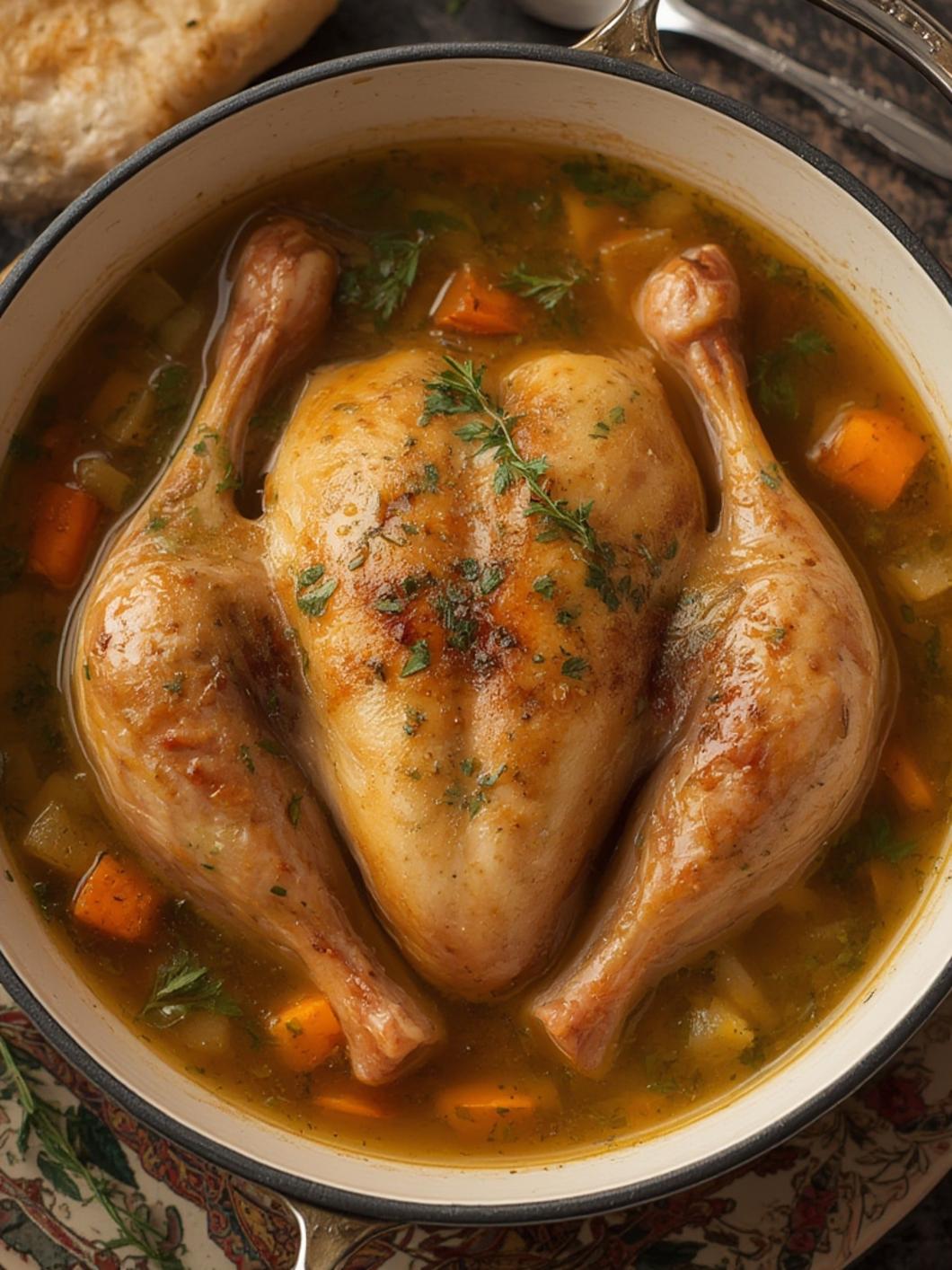
Quick way to make 3-Hour turkey stock recipe
Table of Contents
How to Make Rich and Flavorful Homemade Turkey Stock
Have you ever wondered what to do with your Thanksgiving turkey leftovers? Transform that holiday centerpiece into liquid gold! Making your own turkey stock recipe at home is not only economical but also creates a foundation for countless delicious meals. The process of simmering a turkey carcass stock fills your home with comforting aromas while producing a nutrient-rich base that’s far superior to store-bought versions. Let’s discover how simple it is to create this culinary essential that will elevate your soups, gravies, and sauces to restaurant-quality status.
Thank you for reading this post, don't forget to subscribe!Ingredients List
– 1 turkey carcass (from a 10-14 pound turkey)
– 2 large onions, quartered (skin on)
– 4 carrots, roughly chopped
– 4 celery stalks with leaves, roughly chopped
– 1 head of garlic, halved crosswise
– 2 bay leaves
– 1 tablespoon black peppercorns
– 6-8 sprigs fresh thyme
– 4 sprigs fresh parsley
– 2 teaspoons salt (optional)
– 2 tablespoons apple cider vinegar
– Cold water (enough to cover ingredients)
Timing / Cooking Schedule
– Prep Time: 15 minutes
– Initial Roasting (optional): 30 minutes
– Cooking Time: 3-4 hours (stovetop) or 8-10 hours (slow cooker)
– Straining and Cooling: 1 hour
– Total Time: 4-5 hours (active method) or 9-11 hours (passive method)
Step-by-Step Instructions
1. Break down the carcass: Remove any leftover meat from your turkey carcass (save it for other recipes). Break the bones into smaller pieces to extract maximum flavor and to fit in your pot.
2. Optional browning step: For a deeper flavor, roast the turkey bones and vegetables at 400°F for 30 minutes before making stock.
3. Combine ingredients: Place the turkey bones in a large stockpot. Add the onions, carrots, celery, garlic, and all herbs and spices.
4. Add vinegar and water: Pour apple cider vinegar over the ingredients (this helps extract nutrients from the bones), then add enough cold water to cover everything by 1-2 inches. Starting with cold water helps extract flavor gradually.
5. Simmer gently: Bring to a boil, then immediately reduce to a very low simmer. The key to a clear turkey stock recipe is maintaining a gentle simmer—never a rolling boil.
6. Skim frequently: During the first hour, skim off any foam or impurities that rise to the surface using a slotted spoon.
7. Cook patiently: Simmer uncovered for 3-4 hours, occasionally checking to ensure the turkey carcass stock maintains a gentle simmer and adding more water if needed.
8. Strain thoroughly: Pour the stock through a fine-mesh strainer lined with cheesecloth into large containers.
Nutritional Benefits / Advantages
Homemade turkey stock is a nutritional powerhouse containing:
– High-quality protein (approximately 5g per cup)
– Natural collagen and gelatin for joint health
– Calcium, magnesium, and phosphorus from the bones
– Low in calories (around 40-50 per cup)
– Rich in vitamins from vegetables and minerals from bones
– Free from artificial preservatives and excessive sodium
Tips, Alternative Methods, or Cooking Advice
– Slow cooker method: Place all ingredients in a large slow cooker and cook on low for 8-10 hours for a hands-off approach.
– Pressure cooker speed: Use a pressure cooker/Instant Pot for just 60-90 minutes to achieve similar results.
– Flavor variations: Add mushroom stems, leeks, or fennel for different flavor profiles.
– Concentrated stock: After straining, return stock to the pot and simmer to reduce by half for a more intense flavor base.
– Fat separation: Cool stock completely in the refrigerator to easily remove the solidified fat layer before using.
Common Mistakes to Avoid
1. Boiling vigorously: This creates cloudy stock and can give a bitter taste. Maintain a gentle simmer.
2. Not skimming: Failing to remove impurities results in a muddy appearance and off-flavors.
3. Using too little water: Not covering bones completely limits flavor extraction.
4. Rushing the process: Stock needs time; shortcuts result in less flavorful outcomes.
5. Oversalting: Add minimal or no salt during cooking so you can control seasoning in final dishes.
Storage / Maintenance Tips
– Refrigeration: Store cooled stock in airtight containers for up to 5 days.
– Freezing options: Freeze in ice cube trays for small portions, 1-cup containers, or freezer bags laid flat.
– Labeling: Always mark containers with the date and contents.
– Space-saving tip: Reduce stock by half before freezing, then dilute when using.
– Signs of spoilage: Discard if it develops an off smell or slimy texture.
Conclusion
Making homemade turkey stock recipe is a rewarding culinary practice that transforms food waste into a valuable kitchen staple. Not only does it honor the whole animal by utilizing every part, but the turkey carcass stock you create will elevate countless meals in the coming months. Your homemade version contains deeper flavor and better nutrition than anything you’ll find in a box or can. Why not start this weekend with leftover turkey bones or even purchase some from your butcher? Your future soups, stews, and gravies will thank you!
FAQs
Can I use a rotisserie chicken instead of turkey?
Yes, chicken carcasses work wonderfully using the same method, though you may need two chicken carcasses to equal the yield of one turkey.
My stock didn’t gel when refrigerated. Did I do something wrong?
Not necessarily. Gelling depends on the collagen content of your specific bones. Longer cooking times and including wing tips and joints increases gelatin extraction.
Can I add leftover gravy to my stock?
It’s best not to add gravy, as it contains flour or other thickeners that can make your stock cloudy and limit its versatility.
How can I make my stock more flavorful without adding salt?
Roast the bones and vegetables first, add umami-rich ingredients like dried mushrooms or tomato paste, and consider reducing the finished stock to concentrate flavors.
Is it necessary to add the apple cider vinegar?
While not absolutely required, a small amount of acid helps extract calcium and minerals from the bones, improving both nutrition and flavor.