Steak Medium Rare Temp Guide for Perfect Juicy Results
Ever wondered why steak medium rare is so perfect? Learning to cook steak to the right temperature makes it juicy, tasty, and tender. This guide will show you how to get that perfect doneness and the right cooking temperatures.
Thank you for reading this post, don't forget to subscribe!steak medium rare temp,As we explore medium rare steak, you’ll learn new cooking skills. You’ll get tips to make your steak even better. Get ready to improve your cooking!
Key Takeaways
- Understand the significance of steak doneness levels.
- Learn the ideal temperature for cooking steak medium rare.
- Explore the importance of steak cooking temperature for juiciness.
- Discover top cuts best suited for the medium rare method.
- Uncover essential tools needed for cooking the perfect steak.
Understanding Steak Doneness Levels
When you cook steak, knowing the different doneness levels is key. Each level changes the steak’s taste and feel. You can pick from five main levels: rare, medium rare, medium, medium well, and well done.
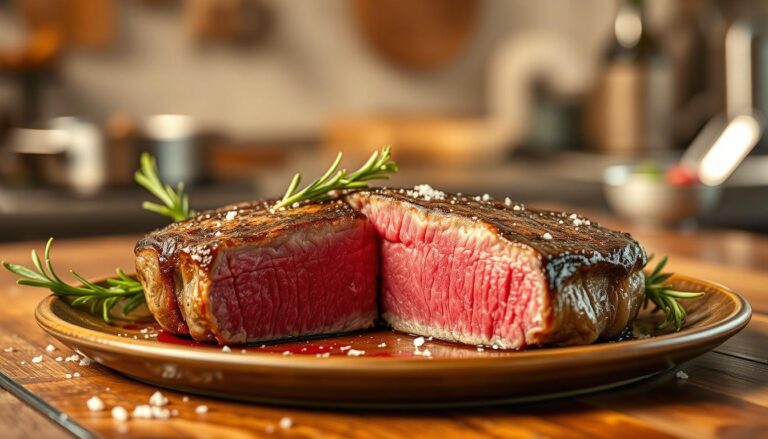
Rare steak has a cool, red center at about 125°F. It’s loved for its soft, tender feel. Cooking steak medium rare is at 130°F to 135°F. It has a warm red center and is juicy, making it a favorite.
Medium steak gets to about 145°F with a warm pink center. Medium well steak is almost done, at about 150°F. Well-done steak is gray-brown all the way through, reaching 160°F or more. Knowing these levels helps you cook the perfect steak at home.
The Importance of Cooking Temperature
Knowing the right steak cooking temperature is key for a perfect bite. It affects the flavor, juiciness, and tenderness of your steak. Cooking at the best temp for medium rare keeps the juices inside, making it tender and delicious.
The Maillard reaction boosts steak flavor. It happens when meat proteins and sugars react to heat, creating a tasty crust. The right cooking temperature maximizes this, keeping the inside juicy.
Getting the temperature right is important. Too hot makes the steak dry, and too cold can be unhealthy. A good meat thermometer helps you hit the mark. For medium rare, aim for 130°F to 135°F for the best taste.
What is Medium Rare Steak Temp?
The medium rare steak temp is loved by steak fans. It lets the steak’s rich flavors and tenderness show. This perfect temperature is between 130°F and 135°F (54°C to 57°C).
Cooking your steak to this temp keeps it juicy inside and crispy outside. It makes the steak taste better and feel softer.
This doneness is a top pick for chefs. It makes the steak feel soft and juicy. You’ll get a nice pink center, showing it’s cooked right.
Knowing the medium rare steak temp can make you a better cook. It will make everyone who tries your steak very happy.
How to Cook Medium Rare Steak
Cooking steak medium rare is an art that needs focus. Start by picking a good cut like ribeye or sirloin. A simple marinade can make it taste better. Try olive oil, garlic, and herbs for extra flavor.
Heat your grill or skillet very hot. This is key to get a good sear and keep juices in. Season your steak, then put it on the hot surface. Let it cook without moving it.
For a 1-inch steak, cook for 4-5 minutes on each side. Use a meat thermometer to check the temperature. Aim for 130-135°F for the best medium rare.
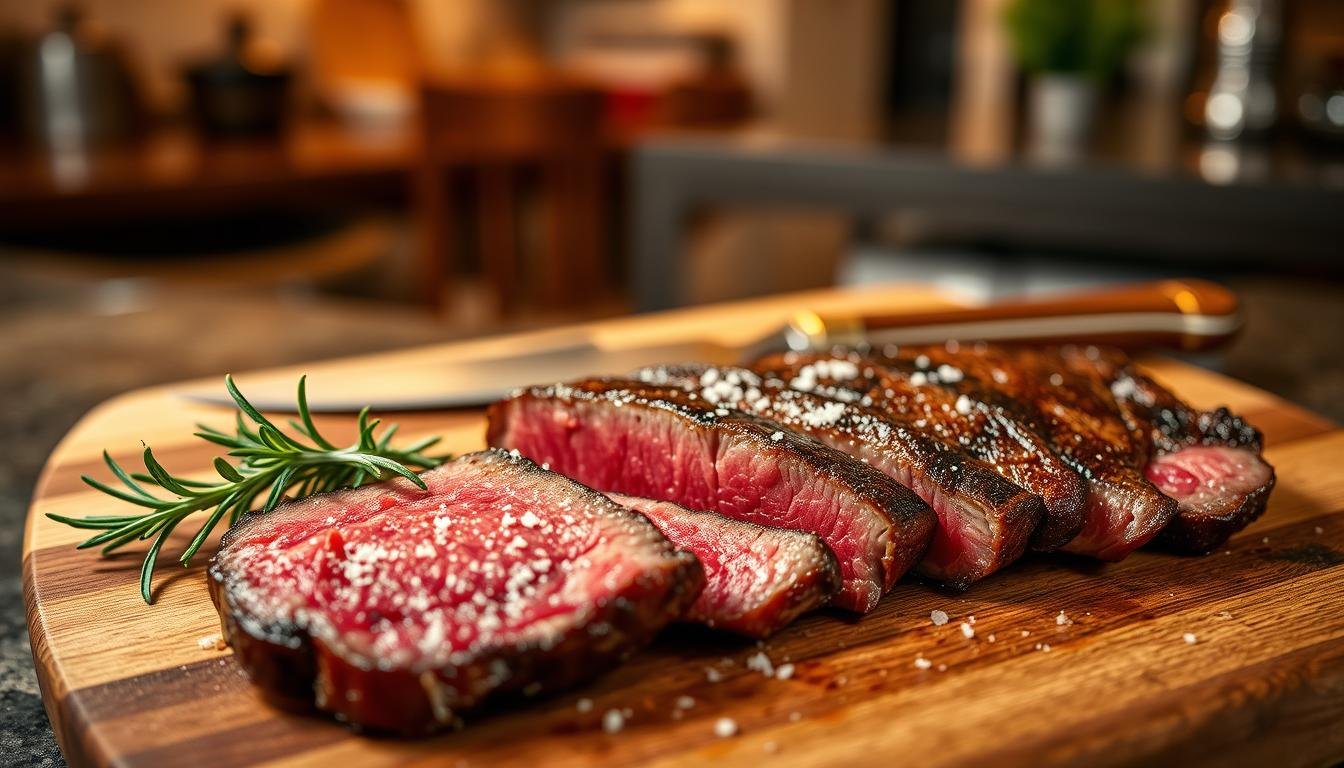
Once it’s cooked, take it off the heat. Let it rest for at least five minutes before cutting. This lets the juices spread, making each bite tasty. Follow these steps to cook a great medium rare steak every time.
Steak Medium Rare Temp: Temperature Specifications
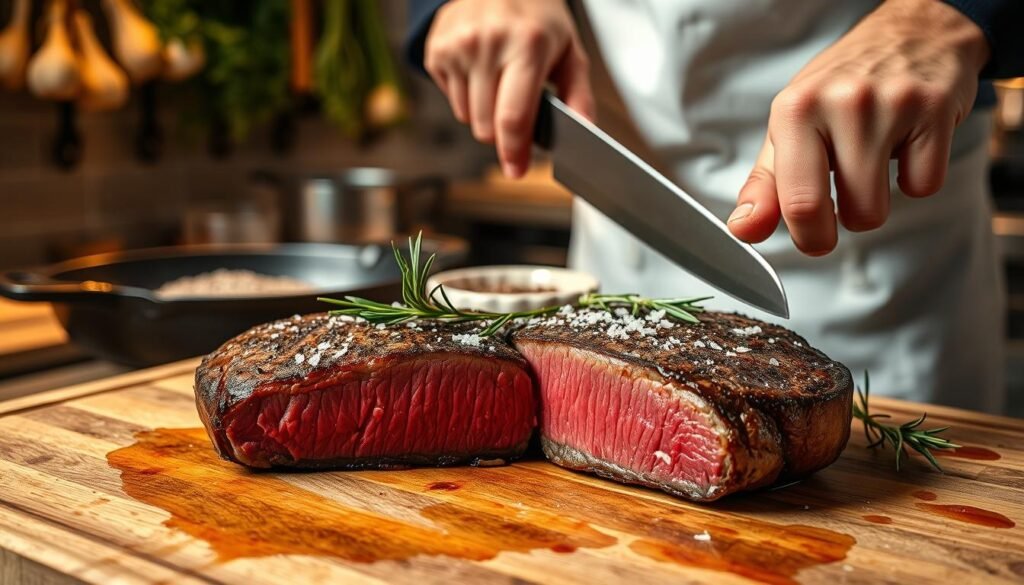
To get the perfect steak medium rare temp, you need to know the exact temperature. The ideal internal temperature is between 130°F and 135°F. This makes the steak warm, pink, and very tasty.
Using a meat thermometer is key. Stick the thermometer into the thickest part of the steak. Make sure it doesn’t touch the bone or the pan. This way, you get an accurate reading and keep the steak juicy.
- Choose a thermometer with a quick read feature for immediate results.
- Clean the probe before and after each use to avoid cross-contamination.
- Allow the steak to rest for a few minutes after cooking; this helps the juices redistribute.
Knowing the temperature specifications for medium rare steak is important. Follow these tips to serve a perfectly cooked, juicy steak. Your guests will love it!
Best Cuts for Medium Rare Steak
Looking for the best cuts for medium rare steak? Some cuts are better than others for perfect doneness and flavor. Here are some top picks:
- Ribeye: The ribeye is famous for its juicy, flavorful meat. It’s full of fat that melts while cooking, making it even tastier.
- Top Sirloin: Top sirloin is tender and full of flavor. It’s not too fatty, making it great for medium rare.
- Filet Mignon: Filet mignon is super tender and mild. Cooking it medium rare keeps it moist and delicious.
- New York Strip: The New York strip has a strong flavor and good marbling. It’s perfect for medium rare, with a nice caramelized crust.
Choosing the right cut makes your steak dinner better. Think about what you like in a steak. Pick the cut that will be perfect for you at medium rare.
Tools You Need for Perfect Cooking
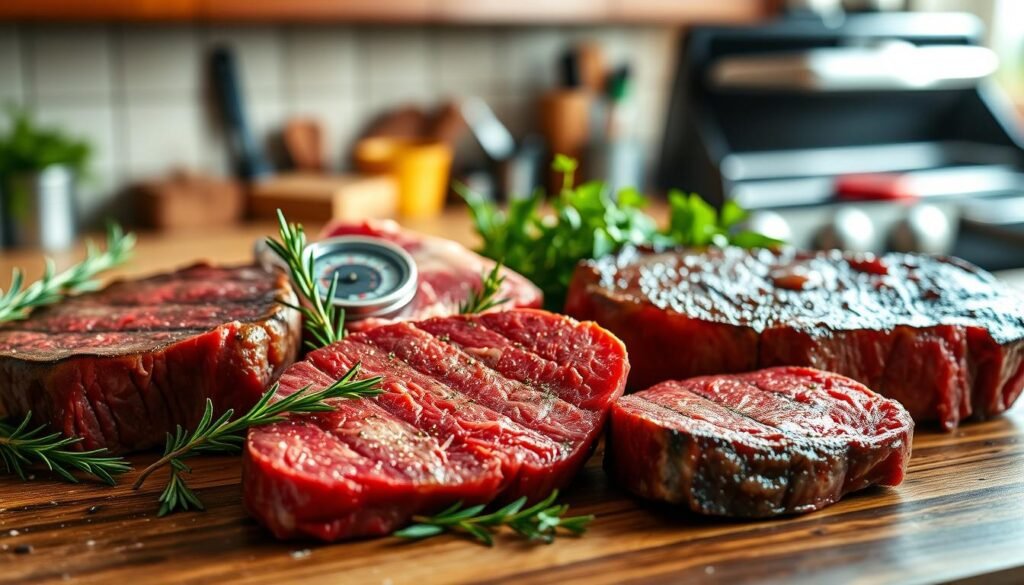
To cook a steak perfectly, you need the right tools. Good equipment makes grilling or pan-searing better. Here are some tools you should have:
- Cast-Iron Skillet: It keeps heat well and cooks steak evenly.
- Grill Thermometer: A digital thermometer lets you check the steak’s temperature. This helps you cook it just right.
- High-Quality Grill: A good grill, gas or charcoal, controls heat well for perfect steak.
- Long-Handled Tongs: These tongs flip the steak without piercing it. They keep the juices in.
- Steak Knife: A sharp steak knife makes cutting easier and cleaner.
Choosing the right tools is key. They make cooking better and help you cook a perfect steak.
Cooking Methods for Medium Rare Steak
Getting the perfect medium rare steak is all about the cooking method. Each way has its own good points and tricky parts. You can pick the best one for you, based on what you like and what you have.
Grilling is a favorite for its smoky taste. It uses high heat to sear the outside and keep the inside juicy. But, watch the heat closely to avoid overcooking.
Pan-searing is another great choice. You cook the steak in a hot pan, often with oil or butter. This makes a nice crust and adds flavor. A quick oven finish helps get the inside just right without burning the outside.
Oven-finishing is good for those who like to try different things. Sear the steak on the stovetop, then finish it in the oven. This method cooks evenly and keeps the meat at the right doneness.
The best way to cook your steak depends on your time and tools. Try out these methods to find the one that fits your taste and life best.
Resting Your Steak for Optimal Juiciness
After cooking your steak, letting it rest is key for the best taste and softness. When you remove it from heat, juices near the surface need time to spread. This makes your steak juicy.
For the best taste, rest your steak for 5 to 10 minutes. This lets the meat relax and juices spread evenly. Wrapping it in foil keeps it warm but lets moisture out, so it doesn’t steam.
Here’s a table to show how long to rest your steak based on its thickness:
| Steak Thickness | Recommended Resting Time |
|---|---|
| 1 inch | 5 minutes |
| 1.5 inches | 7 minutes |
| 2 inches | 10 minutes |
Now you know why resting your steak is important. It makes your steak not just tasty but also juicy. This simple step can make your steak experience better.
Healthy High Protein Meal Ideas
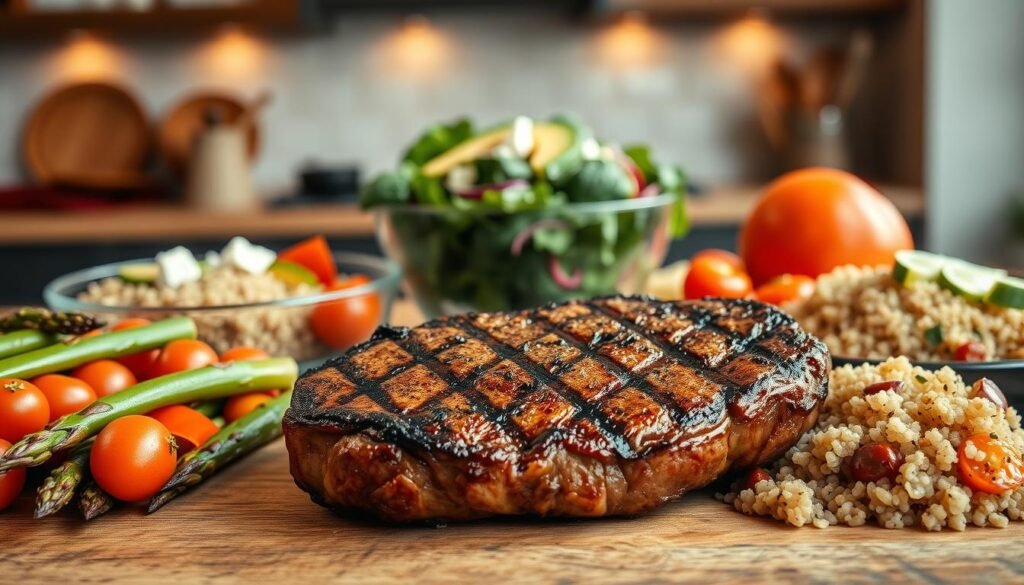
Adding high protein meals to your diet helps reach your fitness goals. There are many steak recipes that taste great and are good for you. Try pairing lean steak with fresh veggies and whole grains for a healthy meal.
Try making a steak salad. Use sliced steak on a bed of greens, cherry tomatoes, and avocado. Add a light dressing for flavor without extra calories. This meal gives you important nutrients and keeps you full.
Another great choice is a steak stir-fry. Cut your steak into strips and cook it with colorful veggies like bell peppers and broccoli. Serve it over quinoa or brown rice for a protein and fiber-rich meal.
For a quick dinner, make steak tacos. Season lean steak with spices, then put it in whole grain tortillas with salsa and lettuce. It’s a tasty and healthy meal.
These ideas let you enjoy tasty high protein meals while eating well. Pick ingredients you like for a meal that’s both satisfying and healthy.
Meal Prep Tips for Steaks
Preparing meals ahead of time saves a lot of cooking time. When planning meal prep for steaks, think about marinating. Marinating makes meat taste better and tender.
You can mix herbs, spices, oils, and vinegar or citrus juice for flavor. This makes your steaks even more tasty.
After marinating, focus on storing leftover steak right. Keeping it fresh is key for meal prep. Put leftover steak in an airtight container to keep moisture and flavor in.
For short-term storage, refrigerate it and eat within 3 to 4 days. Freezing is good for longer storage. Wrap it tightly in plastic or foil before freezing to avoid freezer burn.
When reheating, let the steak warm up to room temperature first. Then, warm it gently to avoid overcooking. This way, you can enjoy your steaks days after cooking, making meal prep easy.
Nutrition Facts About Steak
Steak is full of good stuff, like protein. It’s great for building muscles and staying healthy. A 3-ounce steak has about 22-26 grams of protein.
Steak’s calorie count changes based on the cut and how it’s cooked. Sirloin has 180-200 calories, while ribeye has up to 300. It’s key to watch your calorie intake, depending on your health goals.
Steak also has iron, zinc, and B vitamins. These nutrients help keep you balanced. Eating steak in small amounts can boost your energy and brain function.
Knowing about steak’s nutrition helps you choose wisely. It’s good for protein and calories in your diet. Adding steak to your meals can be tasty and healthy.
Top Mistakes to Avoid When Cooking Steak
Cooking steak might seem easy, but many face big challenges. Knowing common mistakes helps you get the perfect steak. Let’s look at the top mistakes and how to avoid them.
- Improper seasoning: Many forget to season their steak well. A good sprinkle of salt and pepper brings out the meat’s taste. Without seasoning, the steak tastes bland.
- Skipping the resting period: After cooking, let your steak rest for a few minutes. This lets the juices spread, making the steak juicy and tasty. Skipping this step makes the steak dry.
- Rushing the cooking process: Cooking steak too fast can make it uneven. For a perfect medium-rare, use steady heat and take your time. This way, the steak cooks evenly.
Remember these tips to avoid common mistakes and improve your steak cooking. Happy grilling!
Conclusion
Getting the perfect steak is all about mastering the medium rare temperature. We’ve shared key tips on cooking steak, from picking the right cut to the best cooking methods. By understanding temperature and avoiding mistakes, you can make a great steak at home.
Try new recipes and cooking methods. Remember, letting the steak rest is key. It makes the steak juicy and tender, just like in a restaurant. Every time you cook, you get better, so keep practicing.
You’re close to making steaks as good as restaurants. With practice and the right tips, you’ll soon enjoy delicious medium rare steaks. Enjoy your steak adventures and celebrate your progress with every meal!